
ICF vs. Stick Frame: Debunking the Myths of Concrete Construction
 ICF vs. Stick Frame: Debunking the Myths of Concrete Construction
In the construction industry, “standard practice,” and “we’ve always done it this way” is often code for: “This is how we’ve always made money, and we aren’t interested in the effort of learning something new.” While wood framing has been the backbone of residential construction for decades, owners and builders are beginning to realize that in today’s world there are envelopes available that deliver far better comfort, security, and energy efficiency.
General Contractors and owners often hesitate to adopt Insulated Concrete Form (ICF) construction for a variety of reasons. For Builders, it generally comes down to what is easiest, and proven, to make money. However, when you look past the surface, the narrative changes from “expensive alternative” to “strategic advantage.” More than a few Architects have told me: “We understand the advantages of an ICF structure, but every time we send a client to a reputable GC, they talk them out of it.” It is time to address the myths that perpetuate this hesitation.
Myth 1: The Upfront Cost is a Dealbreaker
It is important to be candid: an ICF shell typically carries a higher initial price tag than a wood-framed one. It simply costs a little more to build a superior envelope. However, viewing this as a “premium” ignores the massive offsets provided by the Integrated System. By combining structure, insulation, air barrier, and vapor barrier into a single installation, you eliminate the logistical headaches and overlapping costs of managing multiple trades. Furthermore, the efficiency of an ICF envelope is so profound that a downsized HVAC system isn’t just a possibility—it is virtually guaranteed. In an era where utility rates for electricity and fossil fuels are skyrocketing due to the demands of the global data center boom, the long-term ROI of an ICF build becomes a mathematical certainty, not just a luxury.
Myth 2: It Complicates the Construction Schedule
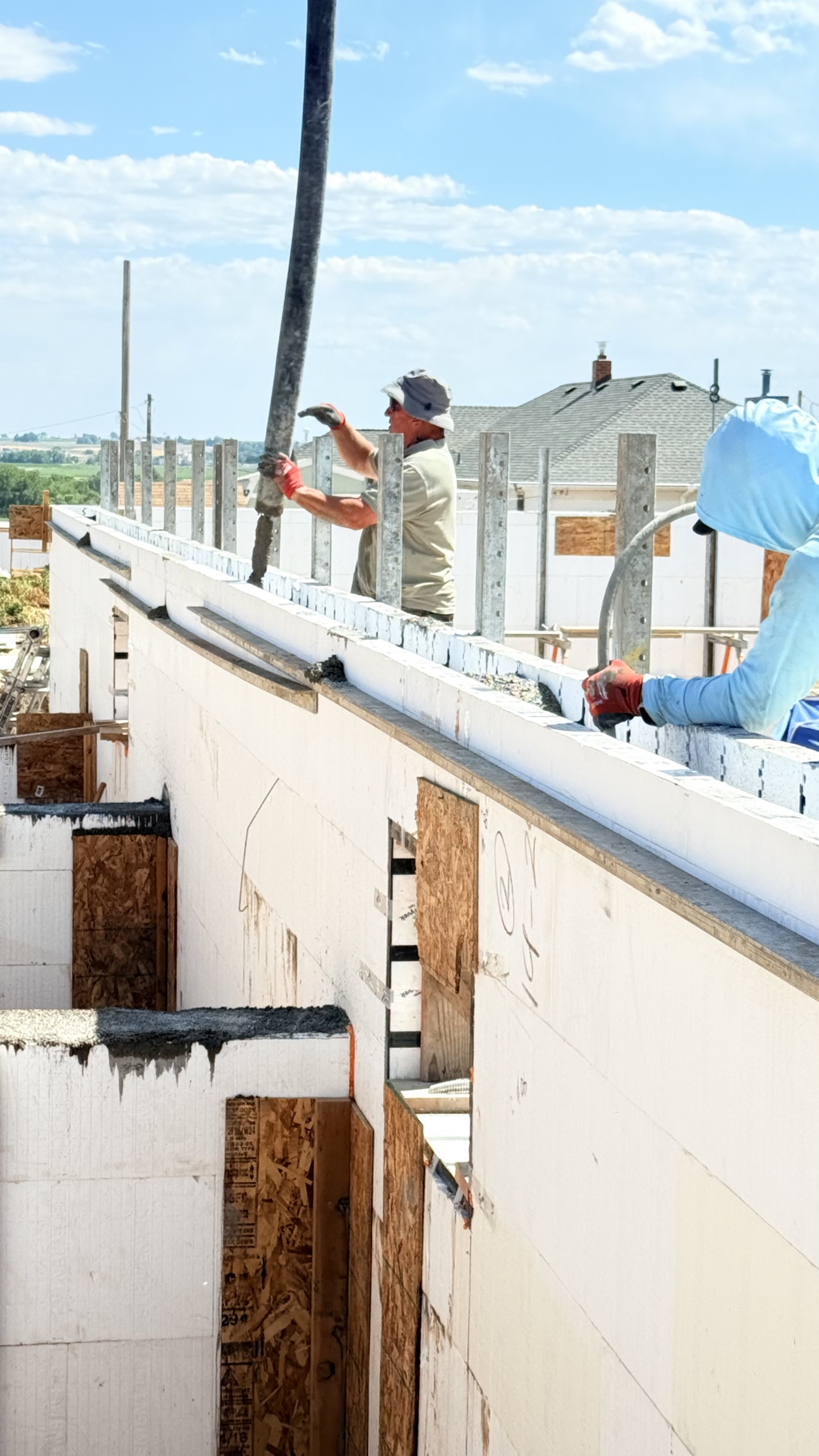
The idea that ICF slows down a project is a misunderstanding of modern site management. In today’s market, the greatest threat to a timeline isn’t the method of construction; it’s the shortage of skilled trades. ICF streamlines the schedule by reducing the number of trades needed to get a building to the “dried-in” stage.
While ICF is far from a “simple” DIY task—it requires an experienced professional team to ensure structural integrity and plumb walls—the all-in-one nature of the system allows for All-Weather Construction. While framing crews are often sidelined by rain, snow, or wind, an ICF team can continue to stack and prepare for a pour, keeping the critical path moving when traditional builds grind to a halt
Myth 3: Mechanicals are Difficult to Install
A common misconception is that plumbing and electrical work are “trapped” or complicated by the concrete core. The reality is that a standard ICF block provides a full 2 5/8″ of foam on each side of the concrete. This provides ample depth to bury electrical wire and even reasonably sized plumbing drains without ever touching the structural concrete.
From a design perspective, this offers a significant advantage: water lines can be safely installed on exterior walls in any climate zone without additional framing. The lines are protected from cold air leaks and interior wall temperatures that very often dip below freezing in very cold climates. These lines will never freeze. While some suggest using hot knives for this work, seasoned professionals know that an Electric Chainsaw is the tool of choice. It allows the crew to efficiently cut horizontal chases through both the foam and the internal polypropylene ties, ensuring a fast, secure installation.
Myth 4: ICF Limits Architectural Creativity
Some believe that using concrete forms forces a design into a “boring box,” but the engineering reality is quite the opposite. Because an ICF wall is inherently stronger and stiffer per unit volume than a wood-framed wall, it actually opens doors for ambitious designs.
Engineers frequently prefer ICF’s for modern structures featuring a high window-to-wall ratio. In traditional framing, large spans of glass require massive, expensive steel headers and complex shear wall calculations. ICF provides natural, immense shear strength and structural rigidity, allowing for expansive openings and creative geometries that would be cost-prohibitive or structurally risky in wood.
Myth 5: The foam in an ICF Wall off-gases chemicals over time, and burns easily
As a Chemical Engineer, I look at the data. The chemistry of Expanded Polystyrene Foam (EPS) tells a different story:
- Chemically Stable: It is non-toxic, biologically inert, and remains stable over long periods without breaking down or off-gassing volatile compounds at room temperature.
- Inhospitable to Pests: It provides no nutritive value for microorganisms—fungi, bacteria, and mold cannot grow on it, and it resists rot and biological attack.
- Environmentally Safe: It does not leach harmful substances into groundwater, which is why it is approved for food packaging and medical devices.
Myth 6: The Benefits are Only for Disaster Zones
It’s true that ICF is the gold standard for hurricane, tornado, and fire resistance, but dismissing it as “over-engineered” for standard use misses the daily practical benefits. The same mass that stops a 2×4 projectile also creates an incredible acoustic barrier, muting the outside world in a way a framed wall never could.
When you combine the sound dampening with the Thermal Battery effect of the concrete—which maintains stable interior temperatures during power outages—ICF ceases to be just a “disaster-proof” choice. It becomes the only logical choice for anyone building for comfort, longevity, and fiscal responsibility in an unpredictable world.
The bottom line
While you can approach the energy performance of an ICF system with wood framing, doing so requires flawless execution: preventing thermal bridging, stopping air leaks, and choosing complex insulation systems. In the real world, you can specify all the detailed measures you want, but trades have an overwhelming tendency to do what they have always done
Nothing can replace the stored heat capacity and inherent strength of concrete. The cost gap between “traditional” and “exceptional” is narrowing. If you are ready to move away from the maintenance cycles and energy leaks of wood framing, let’s talk about your next project.
Happy building…. and never stop improving!
Rick Moskal President of ICF Constructors BS Chemical Engineering ICFConstructors.net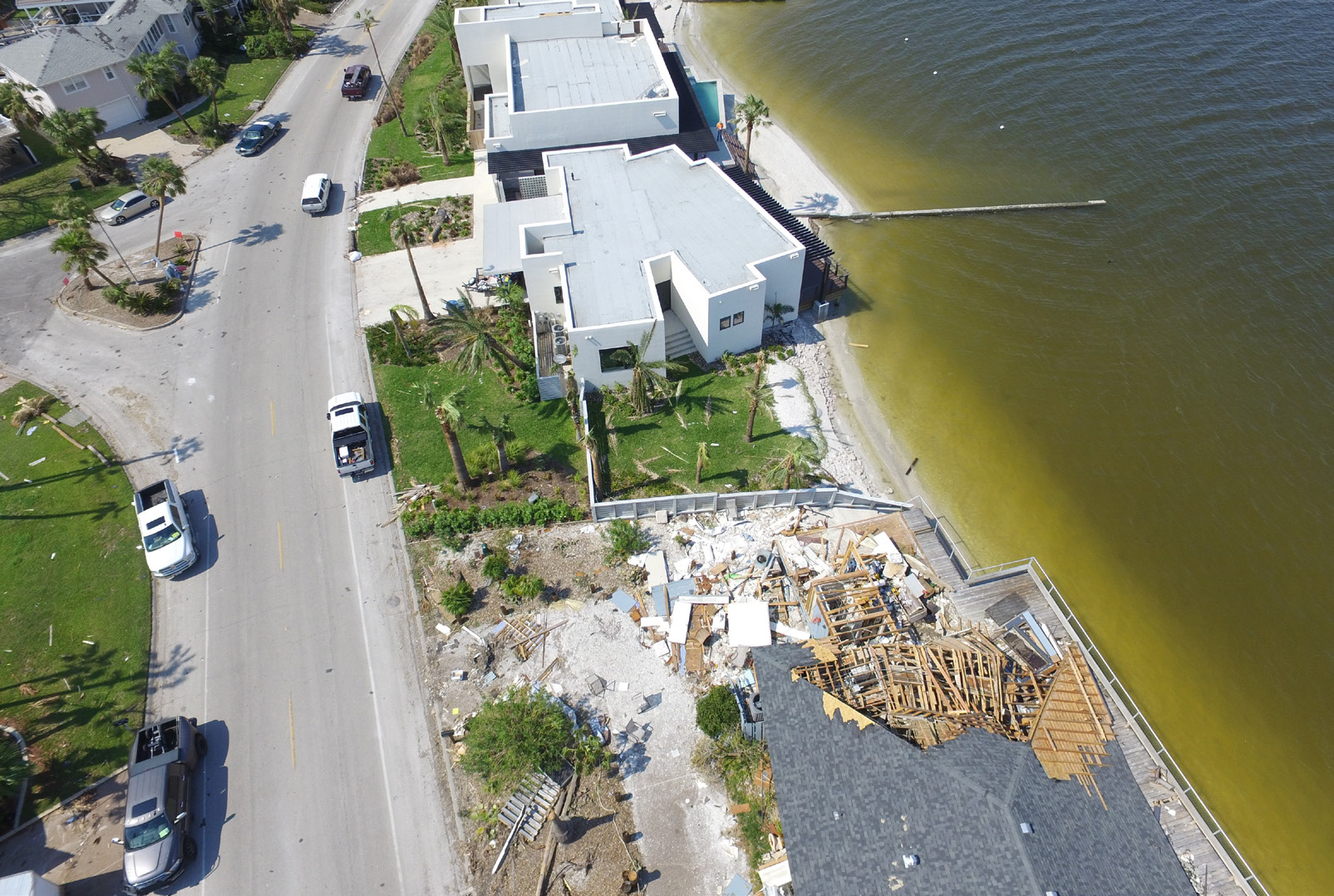




Trackbacks & Pingbacks
hello world
hello world
Comments are closed.